10 summer skincare mistakes to avoid
Let’s be honest: summer feels like the *best* time for your skin. More vitamin D, that sun-kissed glow, poolside vibes… until suddenly you’re staring down a breakout, a sunburn, or skin so dehydrated it looks like a raisin. Sound familiar? You might be making some sneaky **summer skincare mistakes** that are quietly sabotaging your complexion.
The truth is, what works beautifully in January can completely backfire in July. Heat, humidity, sweat, and longer sun exposure hours change *everything* about how your skin behaves — and what it needs. Yet most of us keep running the same winter routine on autopilot, wondering why our skin is throwing a tantrum.
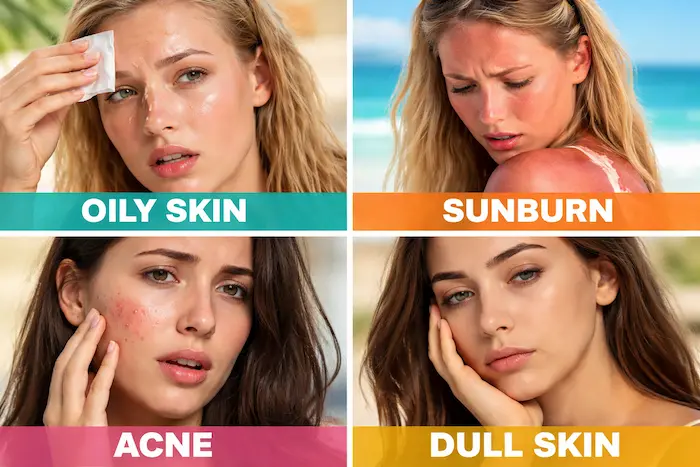
Whether you’re dealing with unexpected breakouts, uneven tone, or that dreaded summer dullness, these **common summer skin mistakes** are almost certainly the culprit. The good news? Every single one is fixable. Let’s break down the 10 biggest **summer skincare mistakes** you’re probably making right now — and exactly how to stop them.
—
## Mistake #1: Overlooking Indoor UV Exposure — One of the 10 Summer Skincare Mistakes to Avoid

You slather on SPF before a beach day — great. But what about the Tuesday you spend sitting next to a sunny office window for six hours? Yep, that counts too.
### Why This Happens in Summer
Most people associate sunscreen with being *outside*. But [according to the American Academy of Dermatology (AAD)](https://www.aad.org/public/everyday-care/sun-protection/sunscreen-patients/sunscreen-faqs), **UVA rays — the ones responsible for aging and DNA damage — penetrate glass.** That means car windows, office windows, and even skylights deliver a steady dose of UV exposure even when you never step foot outside.
UVA rays are also present year-round and penetrate clouds at roughly 80% of their peak strength ([source: Skin Cancer Foundation](https://www.skincancer.org/blog/uva-vs-uvb/)). In summer, the intensity spikes — making indoor exposure a genuinely underrated risk.
### How to Fix It
– Apply a **broad-spectrum SPF 30 or higher** every single morning, indoors or out — treat it like brushing your teeth.
– Choose a **lightweight, non-greasy SPF moisturizer** that doubles as your daily hydrator. Check out our [Best SPF Moisturizers for Oily Skin] for our top-tested picks.
– If you work near windows, consider UV-blocking window film for your office or car.
—
## Mistake #2: Using Heavy Winter Moisturizers — Among the 10 Summer Skincare Mistakes to Avoid
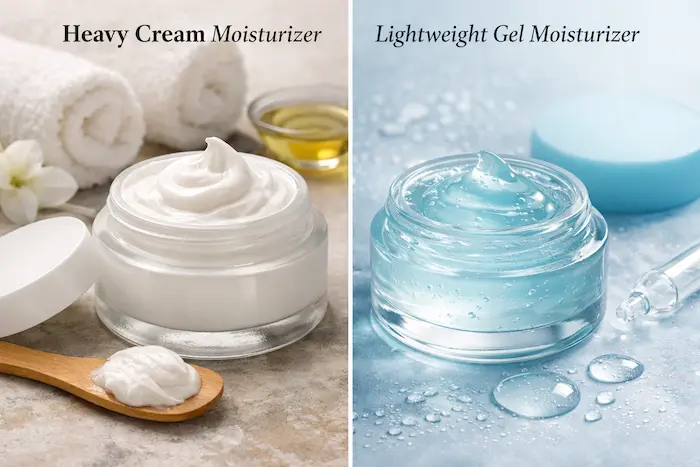
That thick, rich cream that saved your skin from January dryness? In August, it’s basically suffocating your pores.
### Why This Happens in Summer
In winter, cold air and indoor heating strip the skin barrier, demanding heavy emollients and occlusives. Come summer, humidity is naturally higher — which means your skin doesn’t need as much external occlusion. Heavy creams trap **sweat, sebum, and environmental debris** against your skin, which is a one-way ticket to clogged pores and breakouts.
**Key takeaway:** Your moisturizer should match the season, not your emotional attachment to a jar you bought in December.
### How to Fix It
– Swap to a **lightweight gel-cream or water-based moisturizer** with hyaluronic acid in summer.
– Look for labels like “oil-free,” “non-comedogenic,” and “lightweight.”
– Our [Guide to Hyaluronic Acid Serumscovers the best options for keeping skin plump without clogging pores.
– If your skin feels tight after switching, layer a thin serum under a lighter cream rather than going back to your heavy formula.
—
## Mistake #3: Skipping Morning SPF Reapplication
You applied sunscreen at 7 AM. It’s now noon, and you’ve been sweating through your gym session. Congrats — your SPF is basically decorative at this point.
### Why This Happens in Summer
Most people apply sunscreen once in the morning and consider the job done. But [research published in the Journal of Investigative Dermatology] confirms that **sunscreen effectiveness drops significantly after 2 hours**, and dramatically faster if you’re sweating, swimming, or towel-drying.
In summer, when you’re outdoors more and perspiring constantly, a single morning application simply isn’t enough.
### How to Fix It
– **Reapply every 2 hours** when outdoors, or immediately after swimming or heavy sweating.
– Keep a **travel-size SPF spray or powder SPF** in your bag for easy on-the-go reapplication over makeup.
– The [AAD recommends] at least 1 oz (a shot glass worth) per full-body application — most people use far less.
– Browse our [Anti-Aging Sunscreens We Recommend] for SPF formulas that layer beautifully over moisturizer and under makeup.
—

## Mistake #4: Ignoring Sweat-Induced Breakouts
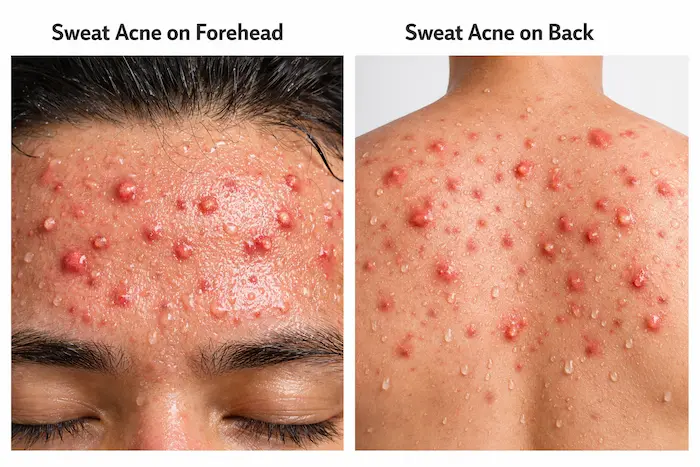
You’ve never had “acne-prone skin” a day in your life — and then summer hits and suddenly your forehead, chest, and back are breaking out. Meet **sweat acne**, also called **miliaria** or **acne mechanica**.
### Why This Happens in Summer
Sweat itself doesn’t cause breakouts — but **sweat mixed with oil, dead skin cells, and bacteria sitting on the skin** absolutely does. Heat also causes **sebaceous glands to produce more oil**, and when that combines with sunscreen, makeup, and sweat, you’ve got a pore-clogging cocktail.
[According to the Mayo Clinic heat and humidity are among the most common acne triggers for adults who don’t otherwise break out.
### How to Fix It
– **Cleanse your face immediately after working out** or heavy sweating — don’t let sweat sit on skin.
– Use a **salicylic acid cleanser** (BHA) 2–3x per week to keep pores clear; salicylic acid is oil-soluble and cuts through sebum buildup.
– Switch to a **mattifying, non-comedogenic SPF** for oily or acne-prone summer skin.
– Wear **moisture-wicking, breathable fabrics** to reduce body acne on chest and back.
Visit our [Skincare Tips category]for our full guide on managing oily skin in summer.
—
## Mistake #5: Not Hydrating Internally Enough
Here’s an unpopular truth: no serum or moisturizer can fully compensate for not drinking enough water. And in summer, dehydration happens faster than you think.
### Why This Happens in Summer
Heat increases perspiration, and many people don’t compensate by increasing their fluid intake. **Dehydrated skin** (different from dry skin) looks dull, feels tight, and makes fine lines more noticeable. It also impairs your skin’s ability to function as a protective barrier.
[A 2015 study published in Skin Research and Technology]found that increased water intake significantly improved skin density and reduced roughness in participants with low habitual water consumption.

### How to Fix It
– Aim for **8–10 glasses of water daily**, increasing further if you’re sweating heavily or spending time outdoors.
– Eat **water-rich foods** like cucumbers, watermelon, strawberries, and leafy greens.
– Add **electrolytes** (sodium, potassium, magnesium) to your water if you’re sweating heavily — plain water alone can dilute electrolyte levels.
– From the outside in, use a **hyaluronic acid serum on damp skin** to bind water to the skin surface, then seal with a lightweight moisturizer.
—
## Mistake #6: Exfoliating Too Harshly in Heat
Exfoliation is great. Over-exfoliation in summer? An absolute disaster waiting to happen.
### Why This Happens in Summer
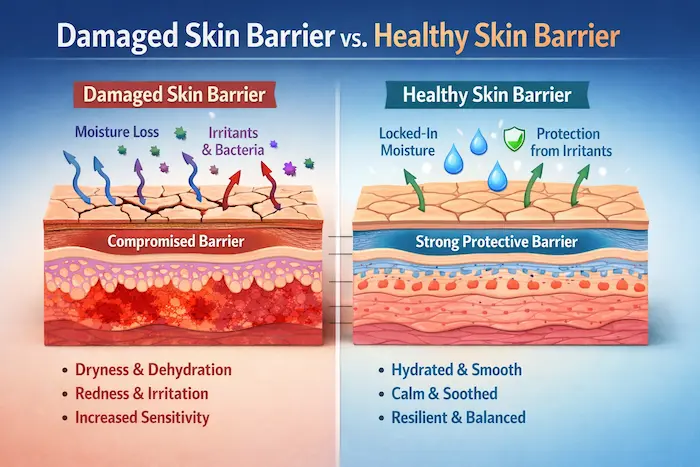
People often ramp up exfoliation in summer to combat the “greasy” feeling and keep pores clear. But harsh scrubs and high-concentration acids remove the **stratum corneum** — your skin’s protective outer layer — leaving it vulnerable to UV damage, sensitivity, and inflammation.
In summer heat, skin is already more reactive. Combine that with aggressive exfoliation and heavy sun exposure and you can end up with **post-inflammatory hyperpigmentation (PIH)**, redness, and a destroyed moisture barrier. [Dermatologists at AAD specifically caution] against over-exfoliation, especially for those with sensitive or darker skin tones.
### How to Fix It
– Reduce exfoliation to **1–2 times per week maximum** in summer.
– Switch from physical scrubs (walnut shell, apricot kernels) to **gentle chemical exfoliants** like lactic acid (AHA) or a low-concentration glycolic acid toner.
– **Always apply SPF the morning after exfoliation** — freshly exfoliated skin is significantly more sun-sensitive.
– If your skin is red, sensitive, or sunburned: skip all exfoliation until it’s healed.
—
## Mistake #7: Neglecting Lip and Eye Area Protection
Your forehead gets sunscreen. Your cheeks get sunscreen. But your lips? Your under-eyes? Often completely forgotten — and they’re among the most vulnerable areas on your face.
### Why This Happens in Summer
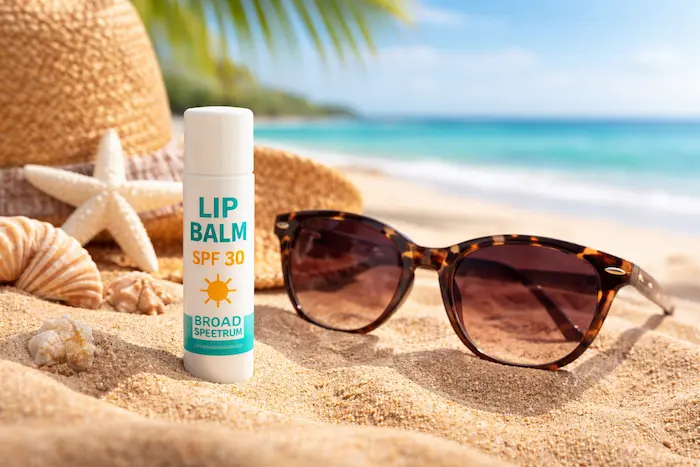
The skin around the eyes is **10x thinner** than the rest of your face, making it especially prone to UV-related aging — think crows’ feet, dark circles, and crepiness accelerated by sun damage. Lips have virtually **no melanin** to act as a natural UV shield, making them particularly susceptible to sunburn and long-term damage, including actinic keratosis.
### How to Fix It
– **Lip balm with SPF 30+** should be in every summer bag — reapply after eating, drinking, or swimming.
– Use an **eye cream with SPF** in the morning, or extend your facial sunscreen carefully to the orbital bone.
– Wear **UV-protective sunglasses** (look for labels confirming 99–100% UVA/UVB protection) to shield the delicate eye area from both direct and reflected UV rays.
– At night, use a dedicated **eye cream with peptides or retinol** to address any accumulated daytime damage.
—
## Mistake #8: Relying on Makeup With SPF as Your Sole Sun Protection
Your foundation says SPF 20 on the label. That does *not* mean you’re protected. Full stop.
### Why This Happens in Summer
The SPF in makeup products is tested based on applying **2mg/cm²** of product — which is roughly 7–8x more than the average person applies during a normal makeup routine. In real-world usage, your SPF 20 foundation is probably delivering closer to **SPF 3–5** worth of protection.
This is supported by findings from [researchers at Liverpool John Moores University who found that makeup-delivered SPF is consistently lower in practice due to insufficient application amounts.
### How to Fix It
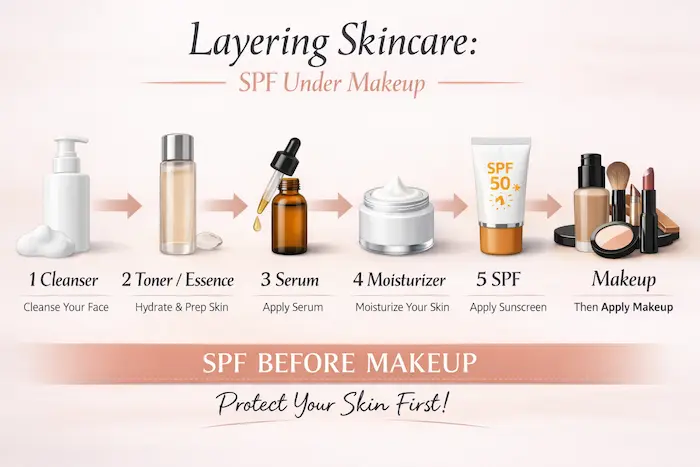
– **Always apply a dedicated SPF underneath your makeup** — makeup SPF is a bonus layer, not your primary defense.
– Layer: moisturizer → dedicated SPF → primer → foundation.
– For midday touch-ups, use a **SPF setting spray or mineral powder SPF** to reapply without disturbing your makeup.
– Check out our [Summer Skincare Routine Template] for a step-by-step morning layering guide.
—
## Mistake #9: Showering With Hot Water Post-Beach
After a long day at the beach, a steaming hot shower sounds divine. Your skin, however, strongly disagrees.
### Why This Happens in Summer
Hot water **strips the skin’s natural lipid barrier** — the protective layer of oils that keeps moisture locked in and irritants locked out. After a day of sun exposure, salt water, and chlorine, your skin barrier is already compromised. A hot shower on top of that = extreme dryness, irritation, and inflammation.

### How to Fix It
– **Shower with lukewarm or cool water** after beach, pool, or outdoor time.
– Use a **gentle, sulfate-free body wash** to rinse off chlorine and salt without further stripping.
– Apply a **rich body moisturizer or after-sun lotion** (look for aloe vera, ceramides, or shea butter) within **3 minutes of getting out of the shower** — this is the golden window when skin is still damp and most receptive to hydration.
– For your face, use a **gentle micellar water or low-pH cleanser** rather than foamy or clarifying formulas after sun exposure.
—
## Mistake #10: Forgetting Nighttime Barrier Repair
Your skin works the overnight shift — repairing, regenerating, and restoring. If you skip dedicated nighttime barrier care in summer, you’re leaving serious skin gains on the table.
### Why This Happens in Summer
In summer, many people gravitate toward minimalist nighttime routines — partly because it’s hot, and partly because they assume their skin is “doing fine.” But a day of UV exposure, heat, sweat, and environmental pollution creates **oxidative stress and micro-damage** that needs active overnight repair.
### How to Fix It
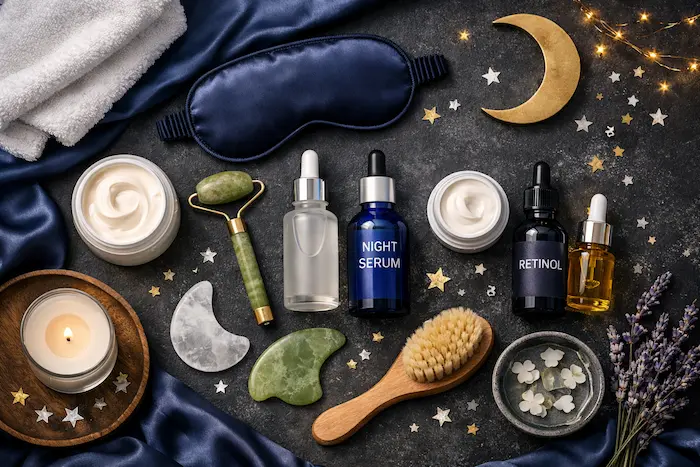
– **Double cleanse** at night (oil cleanser or micellar water first, then gentle gel cleanser) to remove sunscreen, makeup, sweat, and pollution.
– Apply a **vitamin C serum or niacinamide** to address daytime oxidative damage and fade any sun spots developing.
– Layer a **ceramide-rich moisturizer or barrier cream** at night — ceramides are the building blocks of the skin barrier and get depleted by UV exposure. [PubMed research confirms] ceramides play a crucial role in skin barrier integrity.
– 2–3 nights per week, use a **retinol or retinoid** to boost cell turnover and address sun damage accumulation. (Note: always use SPF the following morning.)
– See our [Product Reviews](https://beautycareexpert.click/product-reviews/) section for our curated nighttime repair routine picks.
—
## Wrapping It Up: Your Summer Skin Deserves Better
Making **summer skincare mistakes** isn’t a sign you don’t care about your skin — it’s usually just a sign your routine hasn’t caught up with the season yet. The good news is, once you know what to fix, the solutions are simple: lighter textures, more consistent SPF habits, gentler exfoliation, and a solid overnight repair ritual.
Start with the two or three mistakes that hit closest to home and adjust from there. Your skin will thank you — probably in the form of fewer breakouts, a more even tone, and that healthy summer glow you were actually after. Need a full game plan? Our [Summer Skincare Routine Template](https://beautycareexpert.click/summer-skincare-routine/) walks you through every step, morning and night.
—

## FAQs
### What are the most common summer skincare mistakes?
The most common **summer skincare mistakes** include skipping daily SPF (especially indoors), using heavy moisturizers designed for winter, not reapplying sunscreen throughout the day, over-exfoliating heat-sensitized skin, and forgetting to protect the lips and eye area. These habits can lead to sun damage, breakouts, dehydration, and accelerated skin aging.
### How often should I apply sunscreen in summer?
According to the [American Academy of Dermatology](https://www.aad.org/public/everyday-care/sun-protection/sunscreen-patients/how-to-apply-sunscreen), you should apply a broad-spectrum SPF 30 or higher every morning, then **reapply every 2 hours** when spending time outdoors — and immediately after swimming or sweating. For daily indoor use, a single morning application is generally sufficient.
### Can summer heat cause breakouts even if I don’t have acne-prone skin?
Yes, absolutely. Summer heat increases oil production and causes sweating — and when sweat mixes with sebum, sunscreen, and bacteria on the skin surface, it can clog pores and trigger breakouts even in people who don’t typically experience acne. Using non-comedogenic, lightweight products and cleansing promptly after sweating can significantly help.
### Should I change my entire skincare routine for summer?
You don’t necessarily need a complete overhaul — but a few strategic swaps make a big difference. The most impactful **summer skincare tips** include switching to a lighter moisturizer, adding (or upgrading) a dedicated SPF, reducing exfoliation frequency, and adding a nighttime barrier repair step. Think evolution, not revolution.
### Is SPF in foundation enough for sun protection?
No. SPF in foundation products is rarely applied in sufficient quantities to provide the labeled protection level. Research shows that in real-world use, makeup-delivered SPF provides a fraction of the stated protection. Always apply a dedicated sunscreen underneath your makeup — consider foundation SPF a helpful bonus, not your primary shield.
—
*Disclaimer: This article is for informational purposes only and does not constitute medical advice. For personalized skincare recommendations, consult a board-certified dermatologist.*
*At BeautyCareExpert, some links may be affiliate links. We only recommend products we’ve independently reviewed and believe in.*

Beauty Care Expert is a skincare-focused content creator dedicated to helping people choose the best beauty and skincare products. We research ingredients like Vitamin C, Retinol, and Niacinamide to provide science-backed recommendations for glowing, healthy skin. Our reviews are based on product analysis, user feedback, and dermatology insights.