💄 Introduction
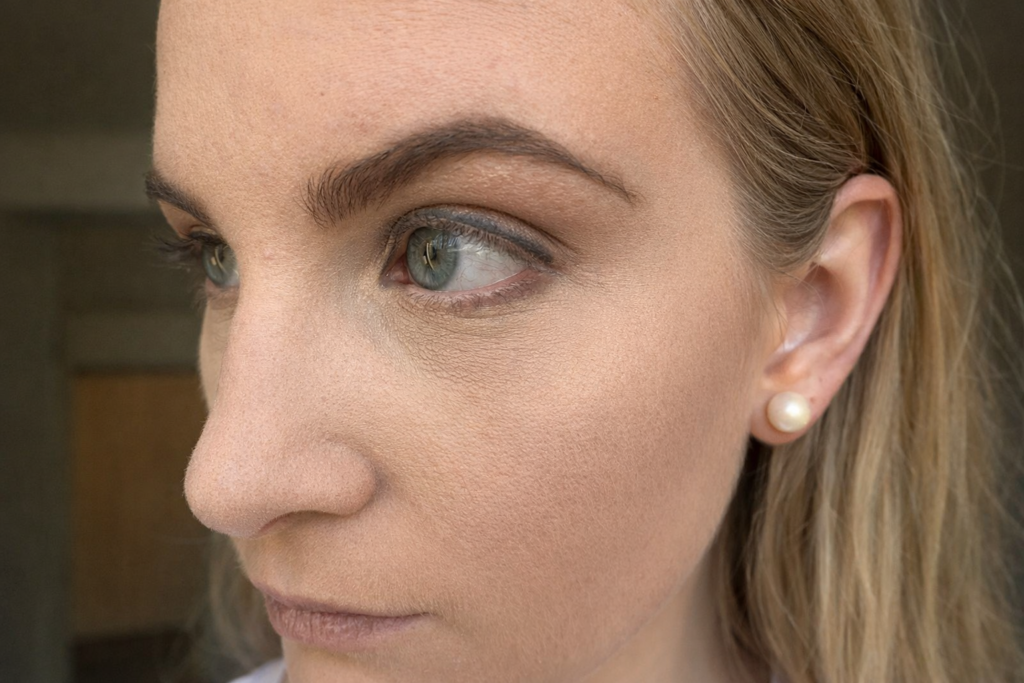
If you’re wondering why makeup looks patchy, you’re not alone… Does your makeup look smooth at first but turns patchy after a few hours? You’re not alone. Many beginners and even experienced users struggle with patchy makeup, uneven foundation, and dry spots.
The good news? You can fix it easily.
In this guide, you’ll learn why your makeup looks patchy and how to fix it instantly for a flawless finish.
❗ What Is Patchy Makeup?
Patchy makeup happens when your foundation or products don’t blend evenly into the skin. This can result in:
- Uneven texture
- Dry or flaky patches
- Makeup separating on the face
- Cakey appearance
🚨 Top Reasons Why Your Makeup Looks Patchy
❌ You’re Skipping Skincare Prep
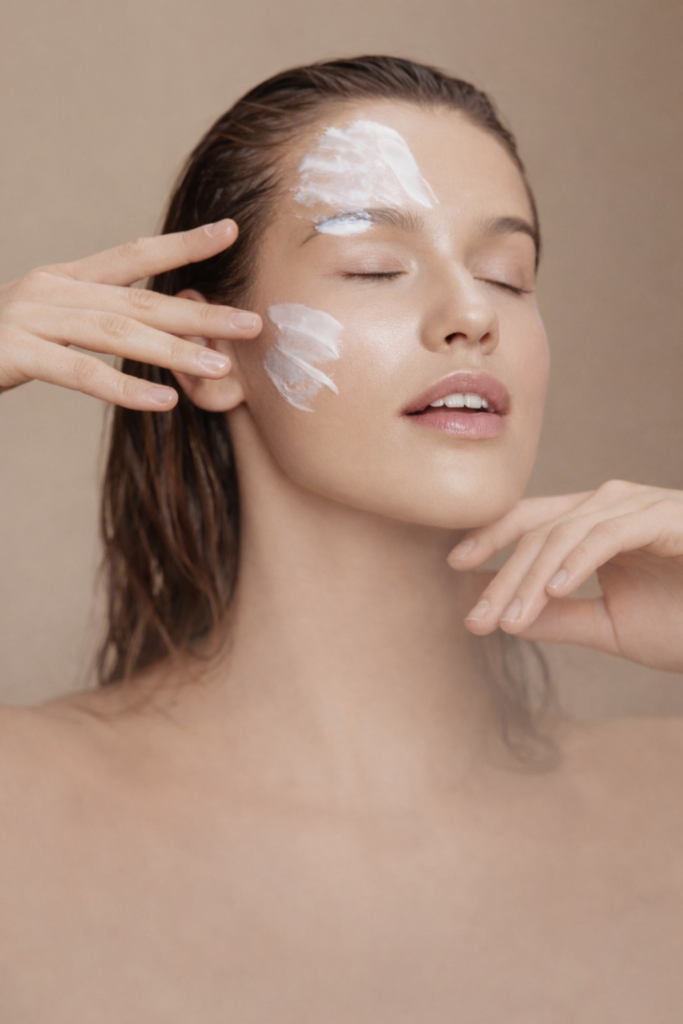
If your skin is dry or not properly prepped, makeup won’t sit well.
Fix:
✔ Cleanse your face properly
✔ Use a lightweight moisturizer
✔ Always apply sunscreen before makeup
. Using Dirty Makeup Brushes or Tools
Dirty tools cause uneven application and buildup.
. Not Hydrating Your Skin Properly
.Lack of hydration makes foundation cling to dry areas.
Mixing Incompatible Products
Silicone-based + water-based products can cause separation.
Applying Makeup Too Quickly
Not letting products settle leads to patchiness.
Overusing Powder Products
Too much powder can dry out your skin and make makeup look cakey.
Weather and Humidity Issues
Heat and sweat can break down your makeup unevenly.
💧 Why Makeup Looks Patchy on Dry Skin or Flaky Areas
Dead skin creates texture, making foundation cling to dry patches.
Dry skin can make makeup look uneven (according to Mayo Clinic).
Fix:
✔ Exfoliate 2–3 times a week
✔ Use hydrating serums (like hyaluronic acid)
✔ Avoid applying makeup on flaky skin
🧴 Why Makeup Looks Patchy When You Use the Wrong Foundation
Using the wrong foundation is a major reason for patchy makeup.
- Oily skin + matte foundation = okay
- Dry skin + matte foundation = patchy disaster
Fix:
✔ Choose foundation based on your skin type
✔ Use dewy formulas for dry skin
✔ Use oil-free formulas for oily skin
🖌️ Why Makeup Looks Patchy When You Apply Too Much Product
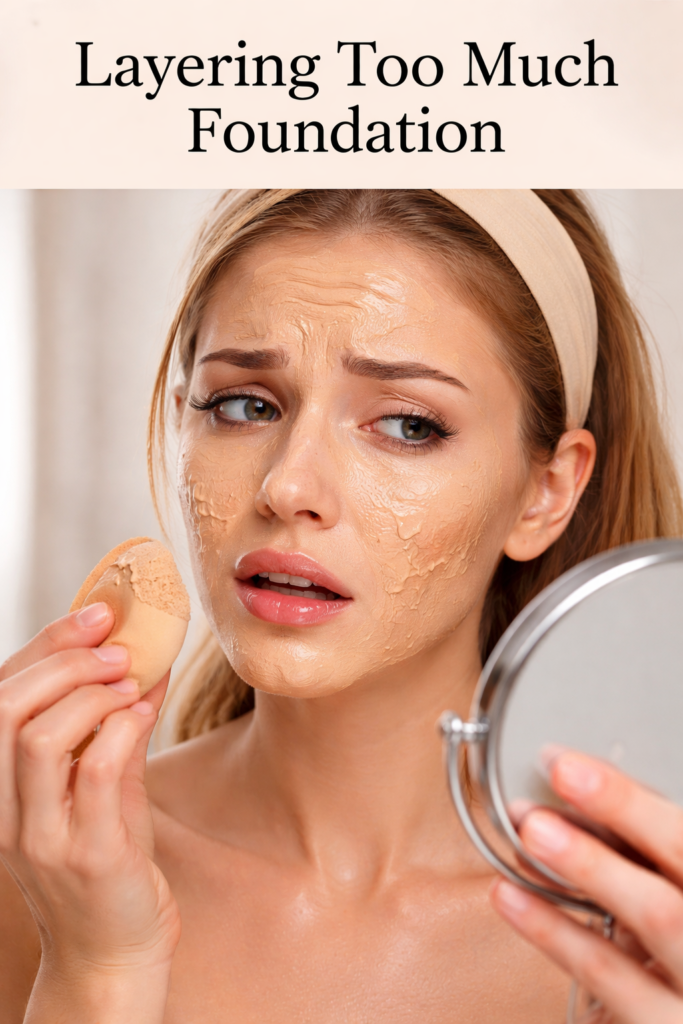
Layering too much foundation makes it cakey and uneven.
Fix:
✔ Apply thin layers
✔ Build coverage gradually
✔ Use a damp beauty blender for blending
⚠️ Not Using Primer
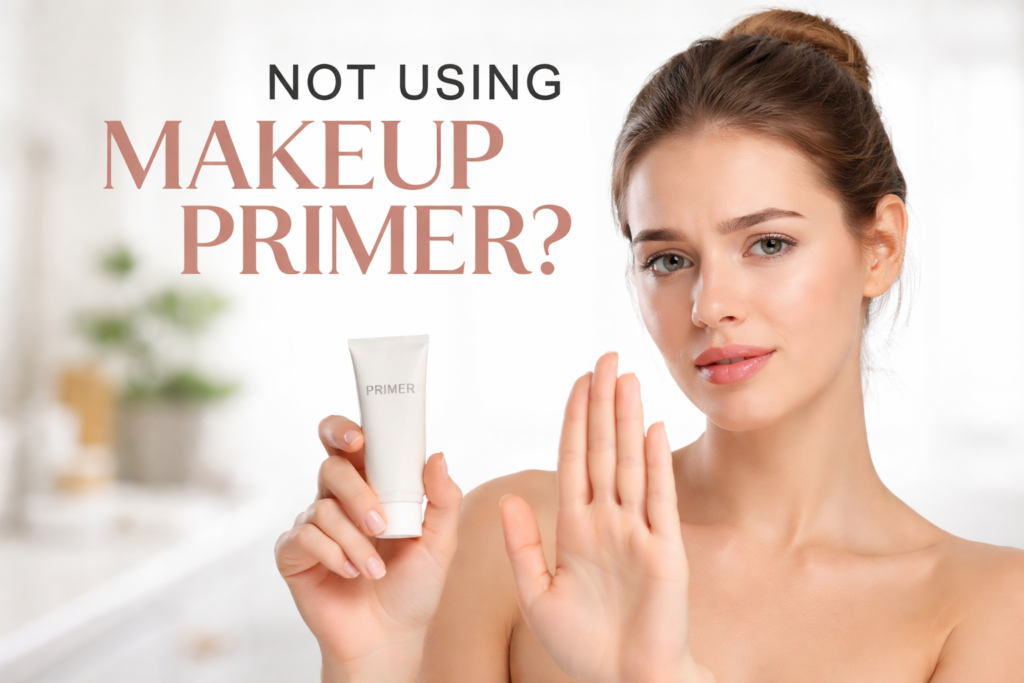
Primer creates a smooth base and helps makeup stick better.
Fix:
✔ Use pore-filling primer for large pores
✔ Use hydrating primer for dry skin
. ⏳ Not Letting Products Set
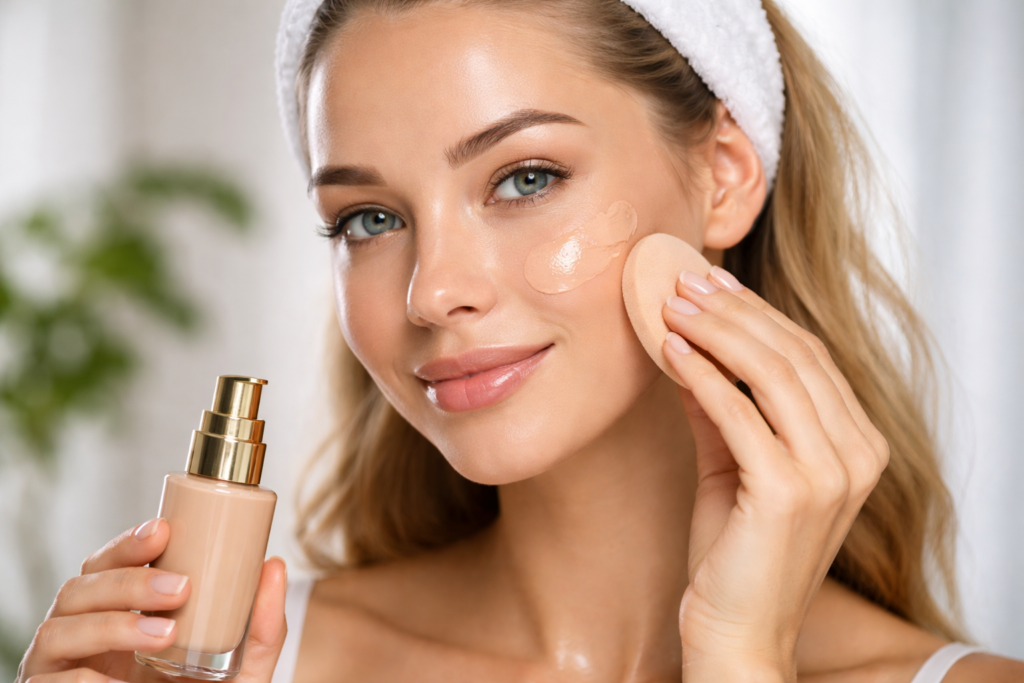
Applying foundation right after moisturizer can cause separation.
Fix:
✔ Wait 1–2 minutes after skincare
✔ Let primer absorb before applying foundation
Top Causes Why Your Makeup Looks Patchy
If you’re wondering why your makeup looks patchy, the problem usually starts before you even apply foundation. Patchy makeup is not just a product issue — it’s a combination of skin condition, product choice, and technique.
1-Lack of Proper Skin Preparation
Skipping skincare is one of the biggest mistakes. If your skin is:
- Dry
- Flaky
- Uneven in texture
Your foundation will cling to dry patches instead of blending smoothly.
2- Dead Skin Buildup
Dead skin cells create a rough surface that prevents makeup from sitting evenly.
Signs:
- Foundation looks cakey
- Makeup separates around nose or chin
- Uneven blending
3-Dehydrated Skin (Even if Oily!)
Many people think oily skin = hydrated skin ❌
But dehydration causes:
- Makeup cracking
- Patchiness around cheeks
- Foundation separating
5- Wrong Application Technique
Common mistakes:
- Rubbing instead of dabbing
- Not blending properly
- Using dirty brushes/sponges
How Different Skin Types Affect Patchy Makeup
Your skin type plays a major role in how your makeup sits.
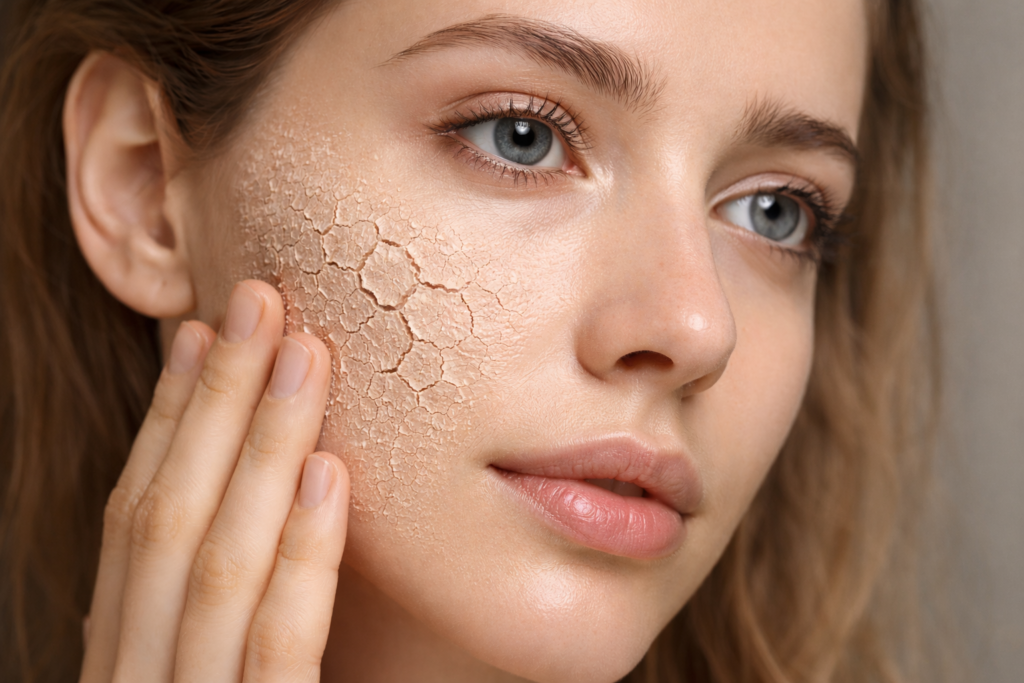
Dry skin is the #1 reason for patchy makeup.
Problems:
- Foundation sticks to flakes
- Makeup looks dull and uneven
✅ Solution:
- Use hydrating moisturizer
- Apply dewy primer
- Avoid matte foundations
Dry skin is the #1 reason for patchy makeup.
Problems:
- Foundation sticks to flakes
- Makeup looks dull and uneven
✅ Solution:
Avoid matte foundations
Use hydrating moisturizer
Apply dewy primer
Oily Skin
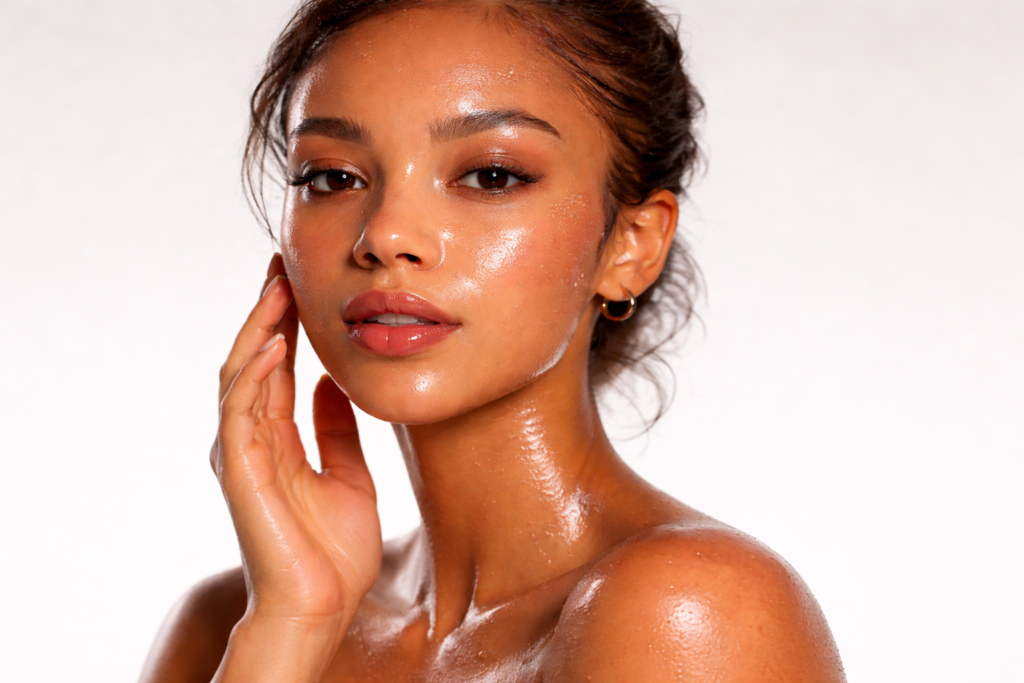
Oily skin causes:
- Makeup sliding off
- Patchiness in T-zone
✅ Solution:
- Use oil-control primer
- Apply lightweight foundation
- Set with powder
Combination Skin
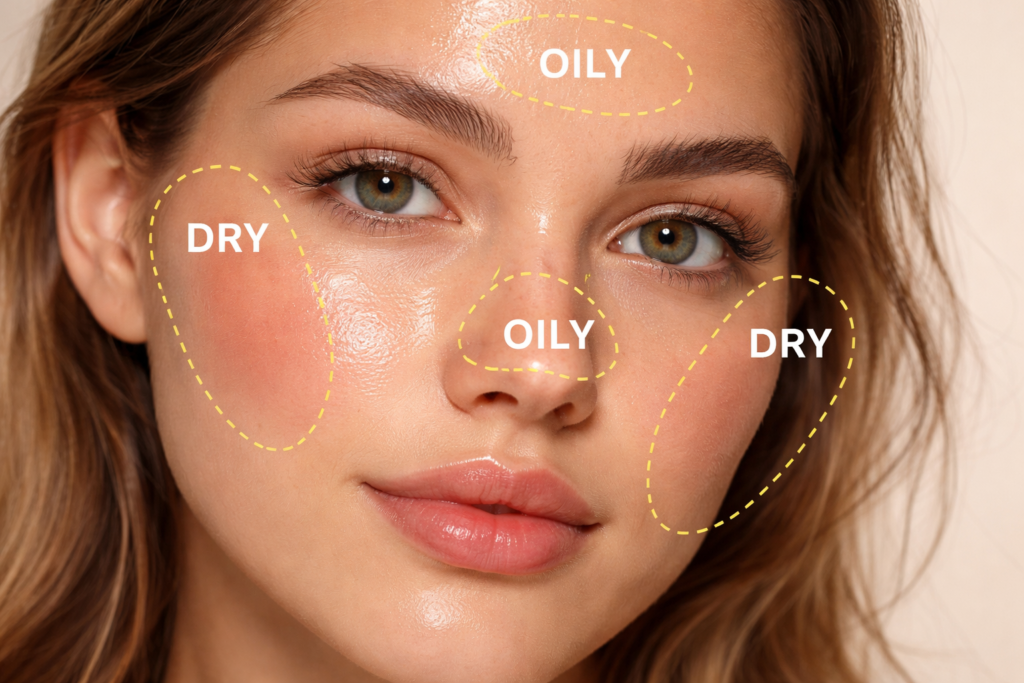
Combination skin = tricky 😅
Problems:
- Dry patches + oily areas together
- Uneven foundation finish
✅ Solution:
- Use different primers for different areas
- Apply foundation strategically
Weather Effects on Makeup
Weather plays a HUGE role in why makeup looks patchy.
Hot & Humid Weather

Problems:
- Sweat breaks down foundation
- Makeup melts → patchy skin
✅ Solution:
- Use sweat-proof primer
- Apply setting spray
❄️ Cold & Dry Weather

Problems:
- Skin becomes dry
- Foundation clings to dry patches
✅ Solution:
- Use heavy moisturizer
- Switch to cream-based products
Wind & Pollution
- Damages skin barrier
- Causes uneven texture
👉 Always cleanse your skin properly before makeup.
Product Mistakes That Cause Patchy Makeup
❌ Using the Wrong Primer
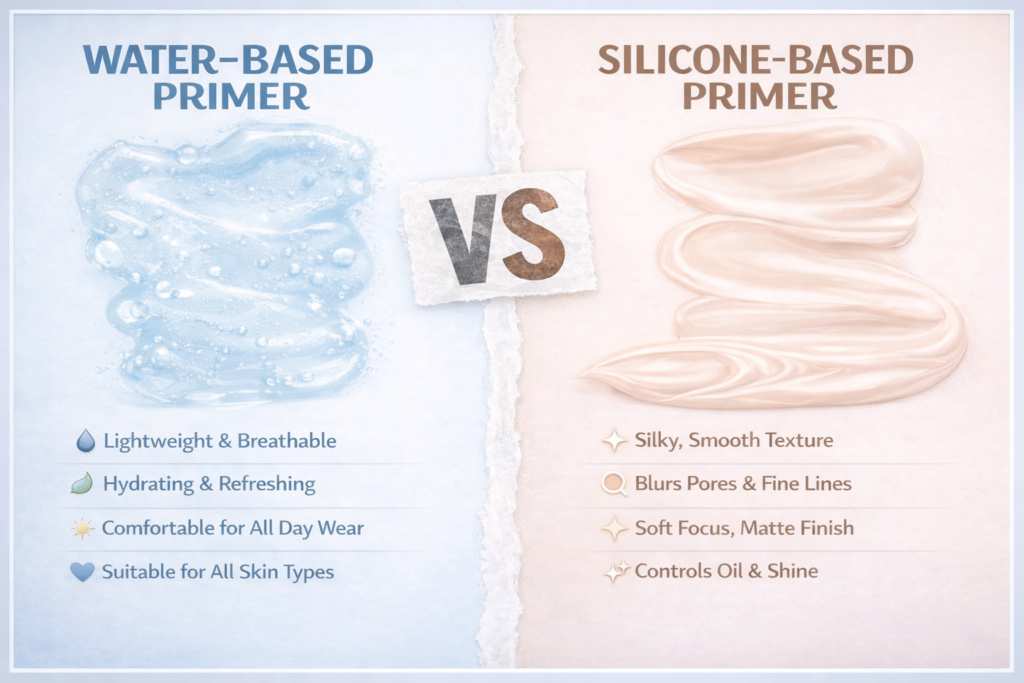
Not all primers work with all foundations.
👉 Mistake:
- Mixing silicone-based primer + water-based foundation
Result:
- Makeup separates → patchy look
❌ Wrong Foundation Formula
Common mistakes:
- Matte foundation on dry skin ❌
- Dewy foundation on oily skin ❌
👉 Always match foundation with your skin type.
❌ Poor Quality or Expired Products
Old makeup:
- Doesn’t blend properly
- Causes uneven texture
👉 Replace foundation every 6–12 months
❌ Not Blending Properly
Blending errors:
- Harsh lines
- Uneven coverage
- Patchy spots
✅ Use:
Soft brush
Damp beauty sponge
Step-by-Step Routine to Fix Patchy Makeup
How to Apply Makeup Without Patchiness (Step-by-Step)
Follow this routine for a smooth, flawless finish 👇
Step 1: Cleanse Your Face
Remove dirt & oil
Use Gentle Cleanser
Step 2: Exfoliate (2–3 Times Weekly)
Removes dead skin
Smooth base for makeup
Step 3: Moisturize Properly
Hydrated skin = smooth makeup
Wait 2–3 minutes before next step
Step 4: Apply Primer (Correct Type)
Dry skin → Hydrating primer
Oily skin → Matte primer
Step 5: Use the Right Foundation
Match skin type + shade
Avoid heavy layers
Step 6: Apply in Thin Layers
Build coverage slowly
Blend with sponge/brush
Step 7: Blend Properly
Tap, don’t rub
Focus on problem areas
Step 8: Set Your Makeup
Use light powder (oily skin)
Use setting spray (all skin types)
Step 9: Final Check
Fix patchy areas with damp sponge
Add glow if needed
✅ How to Fix Patchy Makeup Instantly
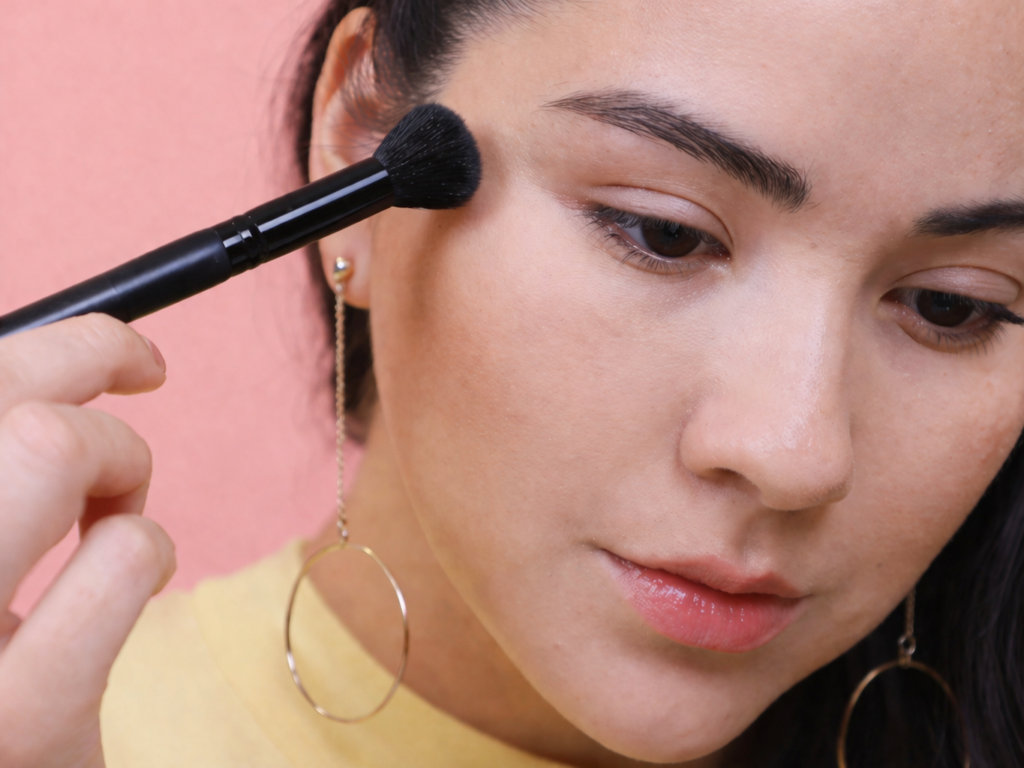
Follow these quick fixes:
✔ Use a damp sponge to blend foundation
✔ Spray setting spray to melt makeup
✔ Press (don’t drag) your foundation
✔ Add a tiny amount of moisturizer to dry areas
✔ Use cream products instead of powder on dry skin
Use a Damp Beauty Sponge
A damp sponge is your best tool to fix uneven makeup.
✔ Lightly dab (don’t rub) your face
✔ Focus on dry or cakey areas
✔ It helps absorb excess product and smooth the texture
👉 This instantly blends foundation into the skin for a natural finish.
Apply Setting Spray to Melt Makeup
Setting spray helps “melt” all layers together.
✔ Spray lightly across your face
✔ Wait a few seconds
✔ Gently press with a sponge
👉 This removes the powdery or patchy look and gives a smooth, skin-like finish.
🌟 Pro Tips for Flawless Makeup
1- Always prep your skin before makeup
2- Use less powder to avoid dryness
3- Avoid mixing silicone and water-based products
4- Clean your brushes regularly
5-Use setting spray for long-lasting results
❓ FAQs
Q1: Why does my foundation look patchy after a few hours?
Because your skin is either dry or producing excess oil, causing makeup to separate.
Q2: How do I stop my makeup from looking cakey?
Use less product, blend properly, and hydrate your skin well.
Q3: Is primer necessary to avoid patchy makeup?
Yes, primer smooths your skin and helps makeup last longer.
Q4: Can dry skin cause patchy makeup?
Yes, dry and flaky skin is one of the main reasons for uneven makeup.
Conclusion
If your makeup looks patchy, the problem is usually your skin prep, product choice, or application technique.
Fix these simple mistakes, and you’ll get a smooth, flawless makeup look every time.

Beauty Care Expert is a skincare-focused content creator dedicated to helping people choose the best beauty and skincare products. We research ingredients like Vitamin C, Retinol, and Niacinamide to provide science-backed recommendations for glowing, healthy skin. Our reviews are based on product analysis, user feedback, and dermatology insights.
Pingback: 🌿 Why Is Your Skin Getting Worse? (Complete 2026 Guide) -