
You wake up, run your fingers through your hair, and — yep. Greasy roots. Again. It’s barely been 24 hours since your last wash, and your scalp is already staging a full oil rebellion. Sound familiar? If you’ve been stuck in the exhausting cycle of washing your hair every single day just to feel human, you are absolutely not alone.
Here’s the thing nobody tells you: washing your oily hair every day might actually be making the problem worse. Studies suggest that up to 80% of people with oily hair reach for the shampoo bottle daily — but this habit can trigger your scalp’s oil glands to go into overdrive, creating an endless greasy loop. It’s like trying to put out a fire with gasoline.
I used to be right there with you. Daily washes, dry shampoo anxiety, and a shower schedule that ruled my life. Then I learned the science behind oily scalp care, and everything changed. Within two weeks of shifting my routine, I went from washing every day to every three days — without the dreaded grease day in between.
In this guide, I’m sharing 7 proven, practical tips to help you wash hair less often — covering everything from dry shampoo mastery and DIY oil absorbers to diet tweaks and silk pillowcases. By the end, you’ll have a personalized roadmap to extend hair wash days, balance your scalp, and finally break free from the daily lather-rinse-repeat cycle.
Ready to reclaim your mornings? Let’s dive in. 🙌
Why Washing Less Often Actually Works for Oily Hair
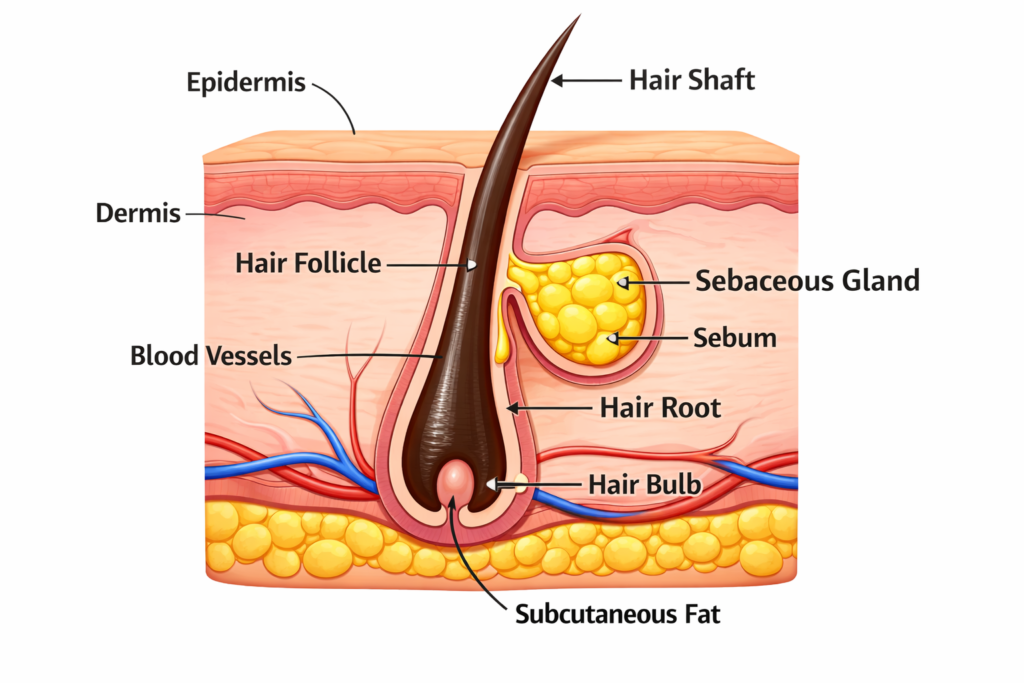
Before we get into the tips, let’s talk about why this works — because understanding the science will make you way more motivated to stick with it.
Your scalp produces oil through tiny glands called sebaceous glands. These glands exist to protect and moisturize your hair — they’re doing a good job, just a little too enthusiastically. Every time you shampoo, you strip away that natural oil layer. Your scalp senses the dryness and panics. Its response? Produce even more oil to compensate.
Think of it like overwatering a plant. The more you flood it, the more it struggles to find balance. Your scalp is the same — the more aggressively you strip its oils, the harder it works to replace them, and the greasier your hair feels, faster.
There’s also the scalp microbiome to consider. Your scalp is home to a delicate ecosystem of beneficial bacteria and fungi that help regulate oil production, fight dandruff, and keep your skin barrier healthy. Washing daily — especially with harsh sulfate shampoos — disrupts this ecosystem. When your scalp microbiome is out of balance, your skin can become irritated, flaky, or even oilier than before. [Source: NIH – Scalp Microbiome Research]
The good news? Your scalp can recalibrate. When you gradually extend hair wash days, your sebaceous glands learn to slow down. It takes a week or two of transition — you’ll need the tips below to get through that phase — but the payoff is a naturally balanced, healthier scalp that doesn’t rush to grease up the moment your shampoo rinses out.
In short: washing less isn’t lazy. It’s actually the smarter, science-backed approach to oily scalp care.
7 Proven Tips to Wash Hair Less Often (Even with Oily Hair)
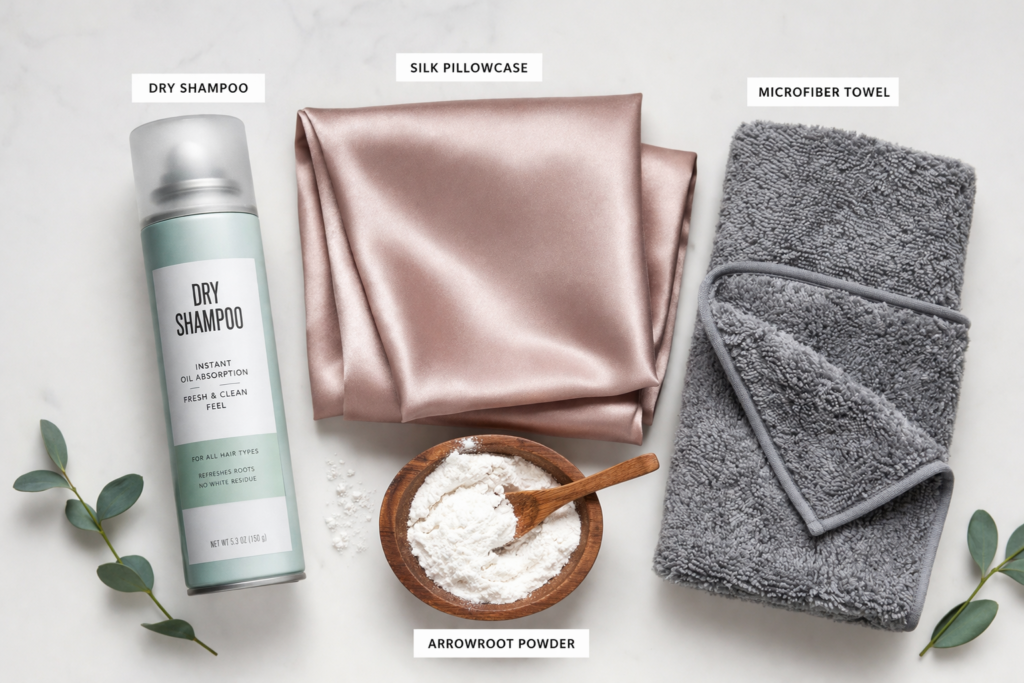
Tip 1: Master Dry Shampoo Like a Pro
Dry shampoo is the ultimate tool to extend hair wash days, but most people use it wrong — they spray it on already-greasy hair and wonder why it clumps. The secret? Apply it the night before, not the morning after. When you work it into your roots before bed, it has hours to absorb excess oil while you sleep, and you wake up with roots that look naturally fresh.
Look for formulas with rice starch or kaolin clay as key ingredients — these are highly effective oil absorbers without the heavy buildup. Brands like Batiste Volumizing Dry Shampoo* or Living Proof Perfect Hair Day Dry Shampoo* are fan favorites for oily hair types. [Source: American Academy of Dermatology – Oily Hair Overview]
How to apply dry shampoo correctly:
- Hold the can 6–8 inches from your roots (closer = white cast, farther = less effective)
- Spray in short bursts, focusing on the crown and hairline
- Wait 60 seconds for it to absorb — don’t rub immediately
- Massage it in with your fingertips, then toss your head forward and shake
- Finish with a light blast of cool air from your blow dryer to set it
⚠️ Common mistake: Don’t use dry shampoo more than two consecutive days without washing — product buildup can clog follicles and irritate your scalp over time.
Tip 2: Try These DIY Oil-Absorbing Treatments
Your kitchen has some surprisingly powerful oily hair tips hiding in it. Natural powders like arrowroot starch, cornstarch, and cocoa powder (great for dark hair!) work just like commercial dry shampoo — absorbing excess sebum from the scalp without stripping moisture from the strands themselves.
These DIY options are especially useful if you have a sensitive scalp that reacts to fragrance or aerosols in commercial products. They’re also incredibly budget-friendly. [Source: Healthline – Natural Dry Shampoo Alternatives]
How to make and use a DIY oil absorber:
- Mix 2 tbsp arrowroot powder + a few drops of your favorite essential oil (lavender works beautifully)
- For dark hair: replace half the arrowroot with unsweetened cocoa powder
- Store in a clean makeup brush or an old spice shaker for easy application
- Dust lightly onto roots, wait 1 minute, then massage in and brush through
💡 Pro tip: Add a small amount of baking soda to the mix for extra oil absorption — but use it sparingly (no more than once a week) as it can disrupt scalp pH with overuse.
Tip 3: Give Yourself a Scalp Massage (Yes, Really)
This one surprises people. A gentle scalp massage improves blood circulation and helps distribute your scalp’s natural oils down the hair shaft — where they should be — rather than letting them pool at the roots and make everything look greasy. It also helps reduce cortisol (the stress hormone), and since stress is a known trigger for excess oil production, this has a double benefit. [Source: PubMed – Effects of Scalp Massage on Hair Thickness]
How to do a scalp massage for oily hair:
- Use dry, clean fingertips — never your nails
- Apply gentle circular pressure starting at the temples, moving to the crown
- Spend 3–5 minutes daily (even while watching TV!)
- Avoid massaging right after washing — your glands are most stimulated then
💡 Pro tip: Add a drop of tea tree essential oil to your fingertips before massaging. Tea tree has natural antibacterial properties that help keep the scalp balanced. Always dilute with a carrier oil first. [Link to our guide: Best Essential Oils for Scalp Health]
Tip 4: Switch to a Microfiber Towel
Your regular bath towel could be secretly sabotaging your hair. Traditional terry cloth towels are surprisingly rough on your strands and scalp — they create friction that roughens the hair cuticle, triggers frizz, and stimulates sebaceous glands to produce more oil as a protective response.
Microfiber towels are ultra-soft, ultra-absorbent, and dramatically gentler on both your hair and scalp. They wick away moisture efficiently without that rough rubbing motion, helping your roots stay cleaner for longer between washes. [Link to our review: Best Microfiber Hair Towels for All Hair Types]
How to towel-dry properly:
- Gently squeeze (don’t rub!) water from your hair using the microfiber towel
- Wrap hair in the towel like a turban for 5–10 minutes
- Follow with a cool or lukewarm blow dry — heat can stimulate oil glands
- Never go to bed with wet hair — moisture + pillowcase = oil and bacteria buildup
⚠️ Common mistake: Rubbing your scalp vigorously with any towel to “speed up drying.” This is one of the fastest ways to activate your sebaceous glands into oil overdrive.
Tip 5: Tweak Your Diet to Control Oil from the Inside
This might be the most underrated tip on this whole list. What you eat has a direct effect on how much oil your skin — and scalp — produces. High-glycemic foods like white bread, sugary drinks, chips, and pastries spike your blood sugar, which triggers a cascade of hormones (particularly insulin and androgens) that stimulate your sebaceous glands. The result? More oil, faster. [Source: NIH – Diet and Sebum Production]
On the flip side, foods rich in omega-3 fatty acids, zinc, and B vitamins can help regulate oil production and keep your scalp’s barrier function healthy.
Dietary swaps for less oily hair:
- Reduce: Sugar, white rice, white bread, fried foods, dairy (for some people)
- Increase: Fatty fish (salmon, sardines), walnuts, flaxseeds, leafy greens
- Stay well-hydrated — dehydration can paradoxically trigger more oil production
- Consider a daily zinc supplement (consult your doctor first)
💡 Pro tip: You don’t have to overhaul your entire diet overnight. Start by cutting out one sugary drink per day and see if you notice a difference in your scalp within 2–3 weeks.
Tip 6: Sleep on a Silk or Satin Pillowcase
Your pillowcase is doing more damage than you think. Cotton pillowcases are absorbent — they pull moisture from your hair and scalp, and the friction from tossing and turning stimulates oil production as your scalp tries to compensate. They also trap sweat, bacteria, and product residue, all of which get transferred back to your freshly washed hair while you sleep.
Silk and satin pillowcases create a smooth, low-friction surface that lets your hair glide without stimulation. They don’t absorb your scalp’s natural oils the way cotton does, so you wake up with roots that feel much fresher. This is a game-changer for anyone trying to wash hair less often. [Source: NIH – Hair Friction and Fiber Damage]
How to upgrade your sleep routine for oily hair:
- Switch to a silk or satin pillowcase (even affordable satin from a local store works)
- Wash your pillowcase at least once a week
- Sleep with your hair loosely braided or in a low bun to keep it off your face and neck
- Use a silk hair wrap or bonnet if you prefer to keep your pillow product-free
💡 Pro tip: Pair this tip with the dry shampoo-before-bed technique from Tip 1 for a powerful one-two punch against morning greasy roots.
Tip 7: Use a Clarifying Shampoo Once a Week
When you do wash your hair, make at least one of those washes count. A clarifying shampoo is a deeper-cleansing formula designed to remove product buildup, excess sebum, pollution, and mineral deposits from hard water — all of which can weigh your hair down and make it look greasy much faster between washes.
The key is balance: use a clarifying shampoo once per week maximum (not every wash), followed by a lightweight, sulfate-free shampoo on your other wash days. This way, you get a thorough deep clean without over-stripping your scalp and triggering that oil rebound cycle we talked about earlier. [Link to our guide: Best Clarifying Shampoos for Oily Hair]
How to clarify without stripping:
- Use a clarifying shampoo once weekly — Sunday resets work great
- Always follow with a lightweight, hydrating conditioner on the ends only (not roots)
- Rinse with the coolest water you can tolerate — cold water closes the cuticle and calms oil glands
- On non-clarifying wash days, try a sulfate-free shampoo to maintain your scalp’s natural balance
- Avoid applying conditioner to your scalp or roots — this adds unnecessary grease
⚠️ Common mistake: Using a clarifying shampoo every single wash. These formulas are powerful — overusing them will dry your scalp out and send your oil glands into hyperdrive. Once a week is the sweet spot.
Common Oily Hair Myths — Busted!

Before you head off to revamp your routine, let’s clear up a few stubborn myths that might be holding you back.
Myth 1: “Oily Hair Needs Daily Shampooing”
Fact: Daily shampooing is often the cause of excess oiliness, not the cure. As we’ve explained, stripping your scalp daily triggers more sebum production. Gradually extending your wash intervals is the scientifically smarter approach for true oily scalp care.
Myth 2: “Dry Shampoo Clogs Your Pores”
Fact: Used correctly and not left on for more than 1–2 days at a stretch, dry shampoo does not clog pores. The issue arises only with chronic overuse and no proper clarifying wash to remove buildup. Follow the instructions in Tip 1 and you’re completely safe.
Myth 3: “Oily Hair Means You Don’t Need to Moisturize”
Fact: Your scalp can be oily while your actual hair strands are dry and brittle — especially if you’re over-shampooing. A lightweight leave-in conditioner on the mid-lengths and ends will not make your roots oilier. [Source: Healthline – Oily Hair Causes and Treatments]
Myth 4: “Only People Who Don’t Wash Enough Have Oily Hair”
Fact: Oily hair is largely genetic and hormonal. Some people simply have more active sebaceous glands — no amount of washing (or not washing) created that. You can manage it beautifully, but it’s nothing to be embarrassed about. It’s just biology.
You’ve Got This — Start Your Journey to Fresher Hair Today

Breaking free from daily hair washing isn’t just possible — it’s genuinely life-changing for your hair health, your schedule, and your sanity. By understanding why your scalp overproduces oil and using the right tools (hello, dry shampoo and silk pillowcases!), you can extend hair wash days and build a routine that works with your hair, not against it.
Here’s your challenge: Try these oily hair tips for just 2 weeks. Start with Tip 1 (dry shampoo the night before) and Tip 7 (weekly clarifying wash), and build from there. Your scalp will need a short adjustment period, but stick with it — the results are absolutely worth it.
When you notice that you’ve made it to day three without greasy roots, come back here and drop a comment — I genuinely want to celebrate that win with you! 🎉
What’s your biggest oily hair struggle right now? Is it the dreaded second-day grease? Product buildup? Let me know in the comments below — and if this post helped you, share it with a friend who’s in the daily-wash struggle too. They’ll thank you. 💛
[Link to related post: Best Shampoos for Oily Hair — Editor’s Top Picks] | [Link to related post: How to Build a Scalp Care Routine from Scratch]
Frequently Asked Questions About Washing Oily Hair Less Often
How long does it take for your scalp to adjust to washing less often?
Most people experience a 1–2 week transition period when they first start extending their hair wash days. During this time, your scalp may produce slightly more oil than usual as it recalibrates. Using dry shampoo, keeping hair in styles like braids or buns, and sticking with the routine will get you through it. After the adjustment window, most people notice significantly reduced oiliness between washes.
Can oily hair damage from daily washing be reversed?
Yes, absolutely! The scalp is remarkably resilient. When you stop over-washing, your sebaceous glands gradually reduce their output over several weeks. Using a weekly clarifying shampoo, along with gentle sulfate-free formulas on regular wash days, helps restore your scalp’s natural microbiome balance and oil regulation. You should notice real improvement within 3–4 weeks of consistent new habits.
Is it okay to use dry shampoo every day to extend hair wash days?
Using dry shampoo daily is not recommended for long-term scalp health. While it’s a fantastic tool for oily scalp care, relying on it every single day can cause product buildup that clogs follicles and leads to irritation or flaking. Limit dry shampoo to a maximum of 2 consecutive days, always followed by a thorough wash with a clarifying formula to reset your scalp.
What hairstyles are best for disguising oily hair on no-wash days?
Your best friends on greasy days are sleek ponytails, low buns, braids, and half-up styles — all of which draw the eye away from the roots. Dry shampoo applied to the crown before styling adds volume and absorbs oil, making these styles look intentional and polished rather than like a cover-up. Headbands and silk scarves are also a stylish trick on day three!
Does hard water make oily hair worse?
Yes, it can. Hard water contains high levels of calcium and magnesium minerals that build up on the scalp and hair shaft, creating a film that traps oil and makes hair look greasier faster. Using a weekly clarifying shampoo helps remove these mineral deposits. You can also install a shower filter designed to soften water — many people with oily hair report noticeable improvement within weeks of making this switch. [Source: Medical News Today – Hard Water and Hair Damage]

Beauty Care Expert is a skincare-focused content creator dedicated to helping people choose the best beauty and skincare products. We research ingredients like Vitamin C, Retinol, and Niacinamide to provide science-backed recommendations for glowing, healthy skin. Our reviews are based on product analysis, user feedback, and dermatology insights.