Introduction
You’re standing in the skincare aisle — or scrolling through an endless product page at midnight — and your skin is sending you mixed signals. It feels tight, dry, and dull one day, then you catch a fine line in the wrong lighting the next. Sound familiar? You’re not alone. Millions of people struggle with the same dilemma: should you reach for hyaluronic acid or retinol?
These two ingredients dominate every “best skincare” list, every dermatologist’s recommendation, and every influencer’s shelfie. But they work in completely different ways — and choosing the wrong one (or misusing both) can leave your skin worse off than before.
Here’s the truth: hyaluronic acid vs. retinol isn’t a competition. Both are powerhouse skincare ingredients with decades of science behind them. But one may suit your specific skin concerns, age, and routine far better than the other — or you may need both, used strategically.
In this post, we’ll break down exactly what each ingredient does, how they compare head-to-head, which is best for your skin type, and how to layer them safely for maximum results. Let’s transform your routine.
We’ll cover: What is Hyaluronic Acid? | What is Retinol? | Head-to-Head Comparison | Skin Type Matchup | How to Use Both | Myths Busted | Top Product Picks | FAQs
What is Hyaluronic Acid? 💧
The Science Behind the Hydration Hero
Hyaluronic acid (HA) is a naturally occurring glycosaminoglycan — a type of sugar molecule — found throughout your body, with the highest concentrations in your skin, joints, and eyes. Your skin already produces it, but production slows with age, sun exposure, and environmental stressors. Topically applied HA works as a humectant, meaning it draws water molecules from the environment and deeper skin layers up to the surface.
What makes HA remarkable is its molecular weight variability. High-molecular-weight HA sits on the skin’s surface, forming a moisture-retaining film. Low-molecular-weight HA penetrates deeper into the dermis for more profound plumping effects. According to a study on PubMed, topical hyaluronic acid significantly improves skin hydration and elasticity with consistent use.
Key Benefits of Hyaluronic Acid
- 💧 Intense hydration — can hold up to 1,000x its weight in water
- ✨ Instant plumping effect — visibly reduces the appearance of fine lines
- 🛡️ Barrier support — strengthens the skin’s natural moisture barrier
- 😊 Universally tolerated — suitable for all skin types, including sensitive skin
- 🌟 Non-comedogenic — won’t clog pores
Who Should Use Hyaluronic Acid?
HA is ideal for anyone with dry, dehydrated, or mature skin. It’s also a go-to for those new to active ingredients who want visible results without irritation risk. If your skin feels tight after cleansing, looks dull, or shows surface-level fine lines, hyaluronic acid can deliver a noticeable glow within days. Check out our Best Moisturizers for Dry Skin for product pairings.

Pros & Cons at a Glance
Pros: Gentle, fast-acting, layerable, safe during pregnancy, works on all skin types.
Cons: Doesn’t address skin cell turnover or deep wrinkles; in low-humidity environments, it may draw moisture from the skin rather than the air — always seal with a moisturizer.
Retinol 101: The Gold Standard in Anti-Aging
What Makes Retinol So Powerful?
Retinol belongs to the retinoid family — a class of vitamin A derivatives. When applied topically, retinol is converted by skin enzymes into retinoic acid, the biologically active form that binds to nuclear receptors in skin cells. This triggers a cascade of benefits: accelerated cell turnover, increased collagen production, and regulated sebum output.
A landmark study published on PubMed demonstrated that topical retinoids significantly reduce fine lines, wrinkles, and hyperpigmentation by stimulating collagen synthesis and normalizing keratinization. DermNet NZ confirms retinoids remain one of the most evidence-backed anti-aging ingredients available without a prescription.
Key Benefits of Retinol
- ⏳ Speeds up cell turnover — reveals fresher, brighter skin beneath
- 🧬 Boosts collagen production — reduces deep wrinkles over time
- 🎯 Targets acne — unclogs pores and prevents future breakouts
- 🌙 Fades dark spots — evening out skin tone and hyperpigmentation
- 🔬 Long-term structural changes — actually remodels skin at a cellular level

Who Should Use Retinol?
Retinol is best suited for adults aged 25 and above concerned about fine lines, wrinkles, uneven texture, hyperpigmentation, or persistent acne. It requires a slow introduction — starting 1–2 nights per week — and consistent sunscreen use. Visit our Complete Guide to Sunscreen for Anti-Aging to understand why SPF is non-negotiable when using retinol.
Pros & Cons at a Glance
Pros: Clinically proven anti-aging, addresses multiple concerns simultaneously, long-term skin remodeling.
Cons: Initial irritation (dryness, peeling, redness), sun sensitivity, not safe during pregnancy, requires a weeks-long adjustment period.
Hyaluronic Acid vs. Retinol: The Head-to-Head Comparison
Side-by-Side Breakdown
Still wondering which ingredient wins the hyaluronic acid vs. retinol battle? This table cuts through the noise with a direct comparison across every major category:
| Category | Hyaluronic Acid | Retinol |
|---|---|---|
| Primary Function | Humectant / Hydration | Cell turnover / Anti-aging |
| Anti-Aging Effect | Plumps fine lines temporarily | Reduces wrinkles structurally (long-term) |
| Hydration | ★★★★★ Excellent | ★★☆☆☆ Can be drying |
| Acne Treatment | Indirect (barrier support) | Direct (unclogs pores, regulates sebum) |
| Collagen Production | Minimal stimulation | Significant collagen boost |
| Side Effects | Virtually none | Dryness, peeling, sensitivity (especially at first) |
| Speed of Results | Immediate (hours) | 4–12 weeks for visible changes |
| Sun Sensitivity | None | High — daily SPF required |
| Safe in Pregnancy? | ✅ Yes | ❌ No |
| Best Age to Start | Any age | Mid-20s and up |
| Skin Types | All skin types | Normal, oily, combination, mature |
| Price Range | $8–$80+ | $10–$150+ |
| AM or PM Use | AM & PM | PM only (photosensitive) |
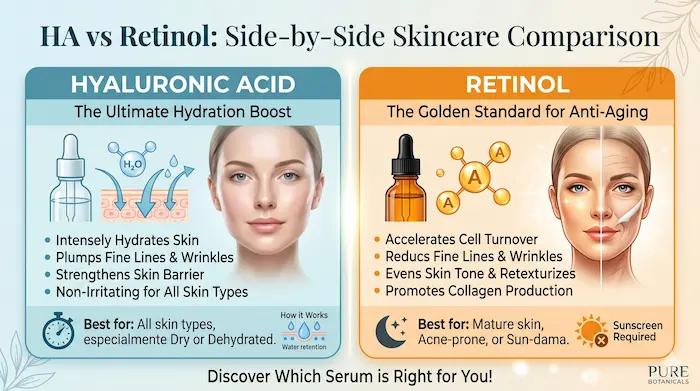
The Verdict on Anti-Aging
If your primary concern is deep wrinkles and long-term collagen loss, retinol is scientifically superior. But if you’re after immediate plumping, hydration, and a healthy glow — or if you’re not ready for retinol’s adjustment period — hyaluronic acid delivers fast, visible results with zero irritation risk. For most people seeking hyaluronic acid or retinol for anti-aging, the real answer is using both strategically.
Which Is Best for Your Skin Type?
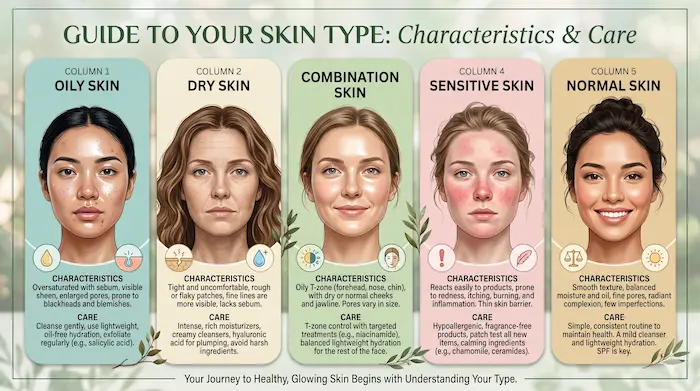
Dry or Dehydrated Skin → Choose Hyaluronic Acid First
If your skin feels tight, flaky, or looks dull, your moisture barrier needs reinforcement before anything else. Hyaluronic acid is your non-negotiable foundation. Layering an HA serum under your moisturizer creates a reservoir of hydration that keeps skin supple all day. Our Ultimate Guide to Hydrating Serums dives deeper into building a dry skin routine that actually works.
Oily or Acne-Prone Skin → Retinol Takes the Lead
Retinol is one of the few ingredients that tackles acne and aging simultaneously. It regulates sebum production, accelerates the shedding of dead skin cells that clog pores, and reduces post-acne marks over time. Start with a low-concentration formula (0.025%–0.05%) to minimize purging. Paula’s Choice explains that consistent retinol use can dramatically reduce breakout frequency within 8–12 weeks.
Combination Skin → Use Both Strategically
Combination skin often has an oily T-zone alongside dry cheeks — a dual challenge that benefits from both ingredients. Apply retinol at night (focusing on oily zones if needed) and hyaluronic acid morning and night as a hydrating base. This layered approach keeps breakout-prone areas clear while preventing the dryness retinol can cause. Take our Skin Type Quiz to pinpoint your exact skin needs and build a custom routine.
Sensitive or Reactive Skin → Start with Hyaluronic Acid
If your skin flares up easily, begin with hyaluronic acid exclusively to strengthen your barrier. Once your skin is more resilient, introduce a gentle, encapsulated retinol (which releases slowly to minimize irritation) once per week. According to CeraVe’s skincare resource hub, building skin resilience before introducing actives dramatically reduces adverse reactions.
How to Incorporate Both Into Your Routine
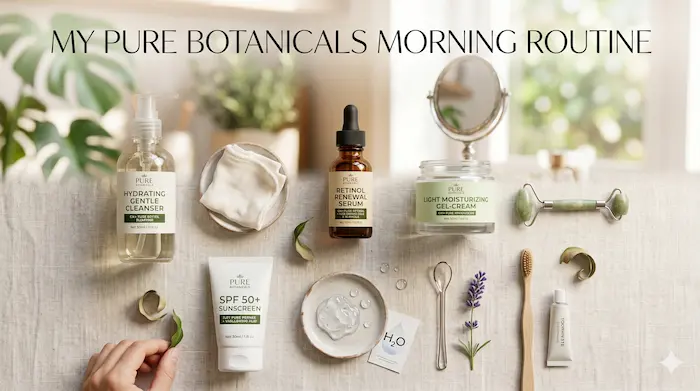
The Golden Rule: Hyaluronic Acid First, Always
When layering skincare, apply products from thinnest to thickest consistency. Hyaluronic acid serums are lightweight and should go on clean, slightly damp skin — the moisture helps HA absorb and bind water more effectively. Retinol goes on next (at night only), followed by a nourishing moisturizer to buffer any potential irritation.
Your Ideal Morning Routine
- Gentle cleanser
- Hyaluronic acid serum (e.g., The Ordinary Hyaluronic Acid 2% + B5)
- Vitamin C serum (see our Ultimate Guide to Vitamin C Serums)
- Moisturizer
- SPF 30–50 (mandatory)
Your Ideal Evening Routine
- Oil or balm cleanser (double cleanse if wearing SPF)
- Hyaluronic acid serum (on damp skin)
- Retinol serum or cream — start 2–3x per week, build to nightly
- Rich moisturizer to lock in hydration and buffer retinol
Pro tip: If retinol irritates you, try the “sandwich method” — apply moisturizer before and after retinol to reduce sensitivity without sacrificing efficacy. This is especially useful with products like Neutrogena Rapid Wrinkle Repair Retinol Serum.
Common Myths About Hyaluronic Acid and Retinol — Busted
Myth #1: “Retinol Thins Your Skin”
False. This is one of the most persistent skincare myths. Retinol initially thins the stratum corneum (the outermost layer of dead cells) — which actually improves product absorption and texture. Meanwhile, it thickens the deeper dermis by boosting collagen production. Long-term retinol users have denser, more elastic skin, not thinner. Our Retinol Myths vs. Facts post covers this in full detail.
Myth #2: “Hyaluronic Acid Is Only for Dry Skin”
False. Even oily skin is often dehydrated (a different condition from being oily). HA replenishes water content, not oil — making it beneficial for every skin type. In fact, well-hydrated oily skin often produces less sebum because the skin isn’t compensating for dehydration.
Myth #3: “You Can’t Use Retinol and Hyaluronic Acid Together”
Completely false. They are one of skincare’s best pairings. HA cushions and hydrates the skin while retinol works its cellular magic — reducing the dryness and peeling that often accompany retinol use. Dermatologists actively recommend this combination.
Top Product Recommendations
Best Hyaluronic Acid Products
- 🥇 The Ordinary Hyaluronic Acid 2% + B5 — ~$10 | Multi-weight HA formula with panthenol for barrier repair. Best budget pick.
- 🥈 CeraVe Hyaluronic Acid Serum — ~$20 | Combines HA with ceramides for barrier-boosting hydration. Fragrance-free, dermatologist-developed.
- 🥉 SkinCeuticals H.A. Intensifier — ~$105 | Clinical-grade, multi-molecular HA with proxylane. A luxury splurge that delivers visible results.
Best Retinol Products
- 🥇 The Ordinary Retinol 0.2% in Squalane — ~$12 | Perfect beginner retinol, buffered in squalane to minimize irritation.
- 🥈 RoC Retinol Correxion Line Smoothing Serum — ~$25 | One of the most studied OTC retinol formulas. Proven in clinical trials over 12 weeks.
- 🥉 Paula’s Choice 1% Retinol Booster — ~$62 | High-strength, fragrance-free, ideal for experienced retinol users seeking maximum anti-aging results.

The Bottom Line: Hyaluronic Acid vs. Retinol
Both hyaluronic acid and retinol deserve a place in a well-rounded skincare routine — but for different reasons. If you’re battling dryness, sensitivity, or just starting your skincare journey, hyaluronic acid is your instant-gratification hero. If you’re ready to invest in long-term anti-aging, retinol is the proven, science-backed ingredient that actually remodels your skin.
The best skincare ingredients comparison isn’t about choosing a winner — it’s about understanding what your skin needs right now and building toward optimal skin health over time. Used together, these two powerhouses can deliver hydration, glow, and youthful resilience simultaneously.
💬 Drop a comment below with your skin type — dry, oily, combo, or sensitive — and I’ll help you build the perfect HA + retinol routine for you! And don’t forget to explore our Best Skincare Routine for Beginners to lay the perfect foundation.
Frequently Asked Questions
Q: Can I use hyaluronic acid and retinol together?
Yes — they are actually one of skincare’s best ingredient pairings. Apply hyaluronic acid first on damp skin, follow with retinol, then seal with moisturizer. The HA cushions your skin and helps reduce the dryness and irritation that retinol can cause.
Q: Which is better for anti-aging: hyaluronic acid or retinol?
For long-term, structural anti-aging — reducing deep wrinkles and boosting collagen — retinol is scientifically superior. Hyaluronic acid provides immediate plumping and hydration, temporarily reducing the appearance of fine lines. For comprehensive anti-aging results, use both.
Q: Is hyaluronic acid or retinol better for dry skin?
Hyaluronic acid is the better choice for dry or dehydrated skin as a first priority. It provides immediate, intense hydration and strengthens the skin barrier. Once the barrier is healthy, retinol can be introduced carefully, buffered with a rich moisturizer.
Q: Can I use retinol every night as a beginner?
No — beginners should start retinol 1–2 nights per week for the first 4 weeks, then gradually increase frequency. This allows your skin to build tolerance and minimizes the “retinol purge” phase of peeling and redness.
Q: Is it safe to use hyaluronic acid during pregnancy?
Yes, hyaluronic acid is considered safe during pregnancy. Retinol, however, is not recommended during pregnancy or breastfeeding. Always consult your OB-GYN or dermatologist before using any active skincare ingredients during pregnancy.

Beauty Care Expert is a skincare-focused content creator dedicated to helping people choose the best beauty and skincare products. We research ingredients like Vitamin C, Retinol, and Niacinamide to provide science-backed recommendations for glowing, healthy skin. Our reviews are based on product analysis, user feedback, and dermatology insights.